
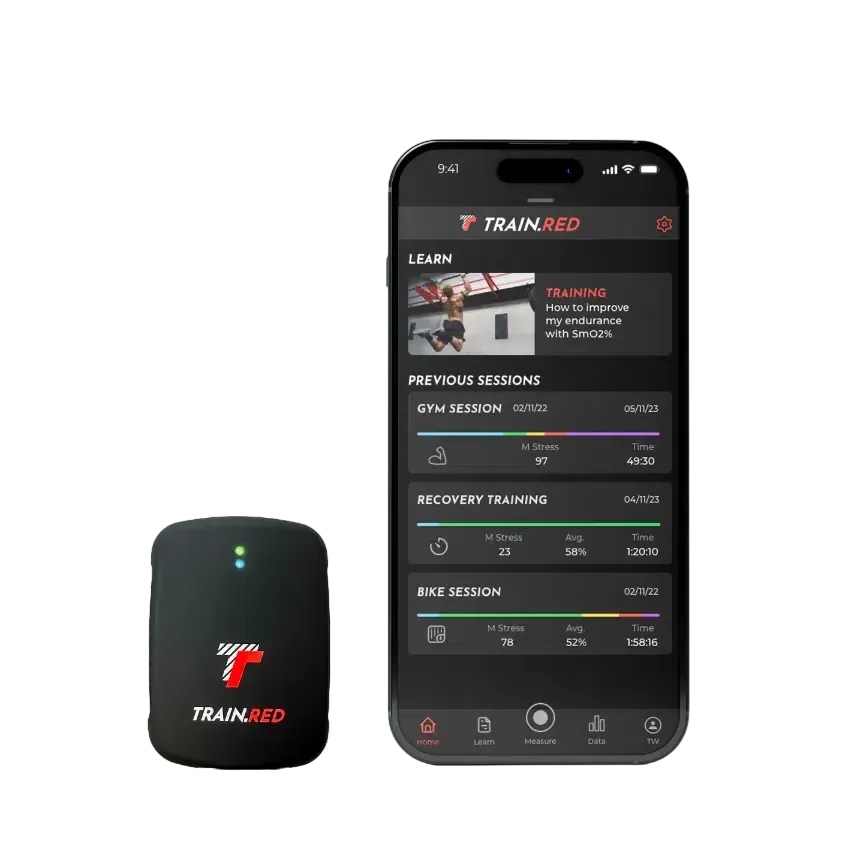
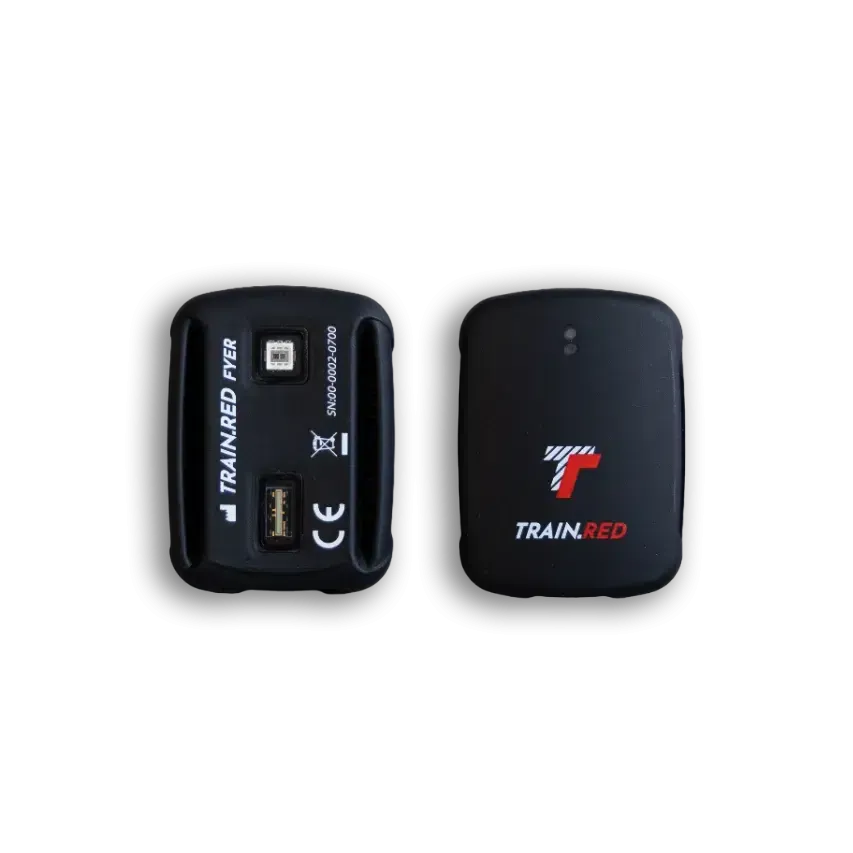
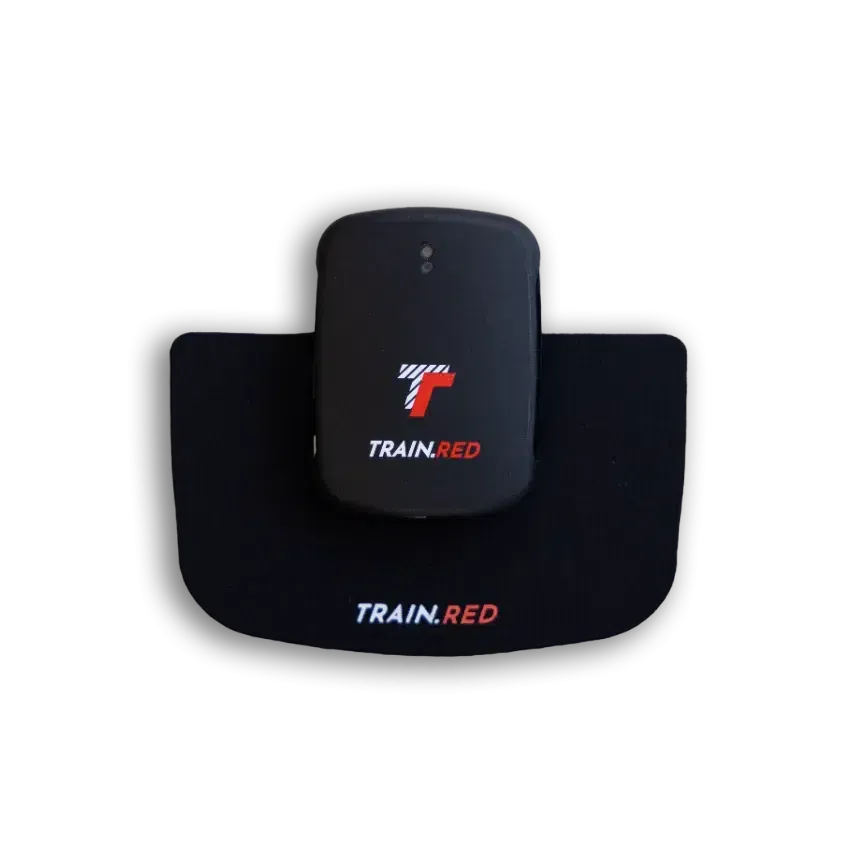
Sensor de oxígeno muscular Train.Red FYER 2.0 + app
Build your own SmO2 baseline
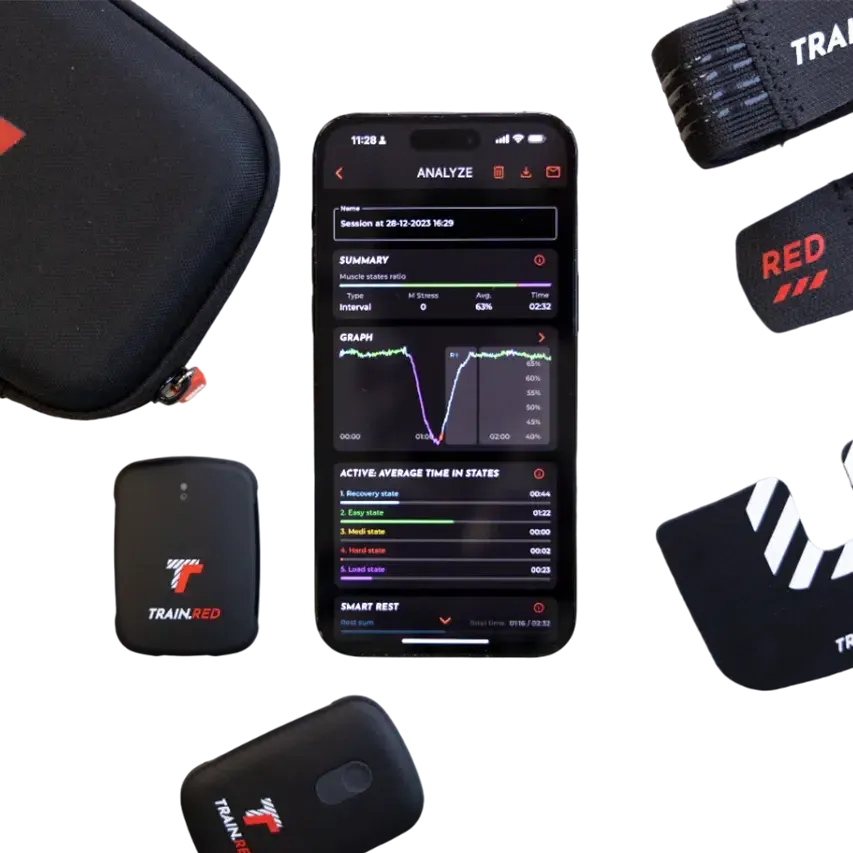
- 1x Flyer
- Charging Cable
- Free App
New to muscle oxygen, guided start
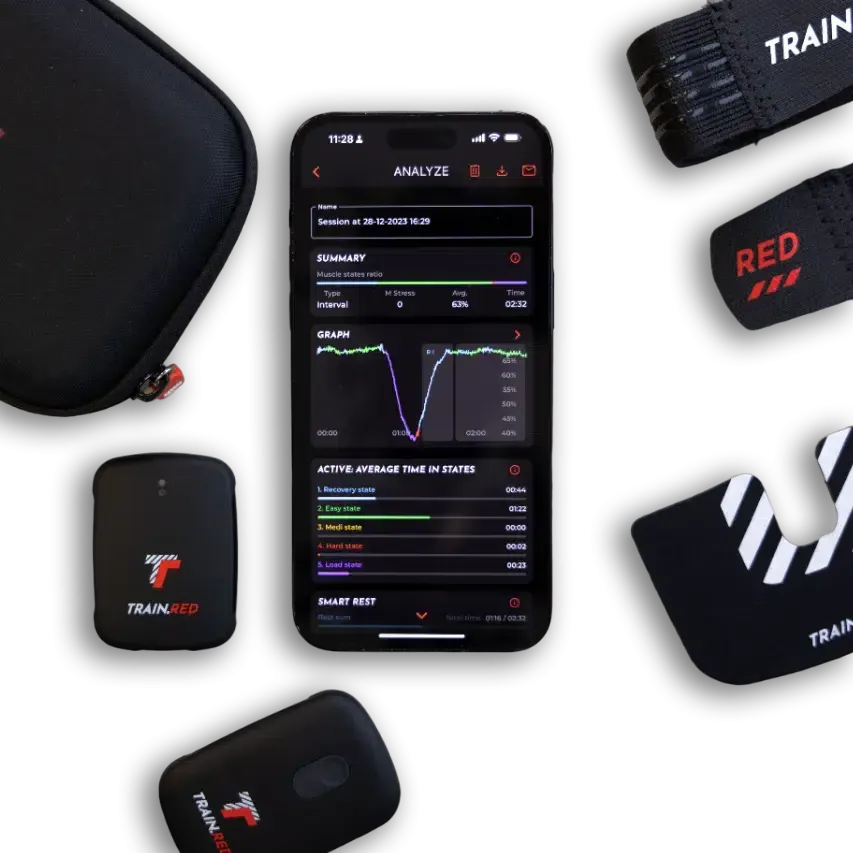
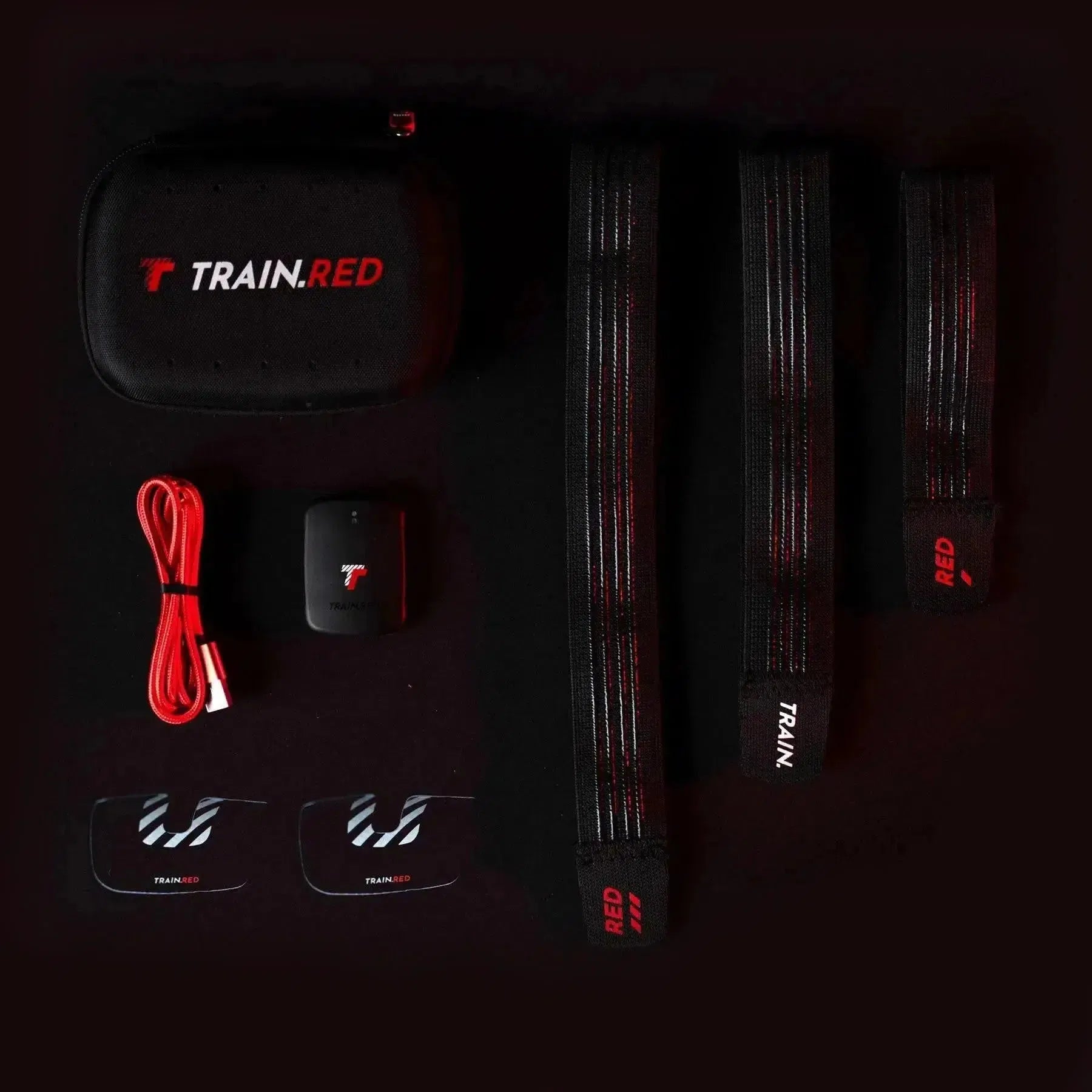
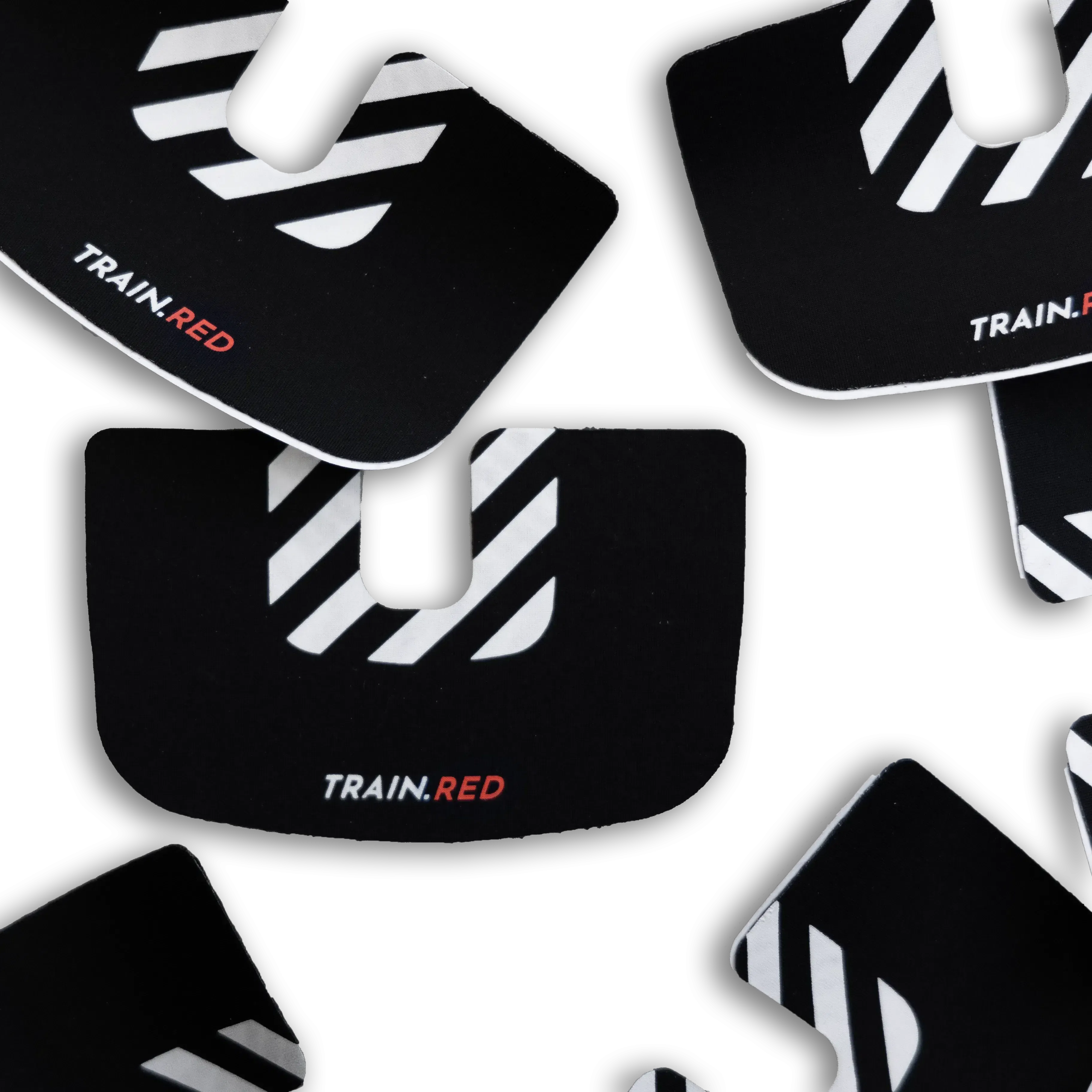
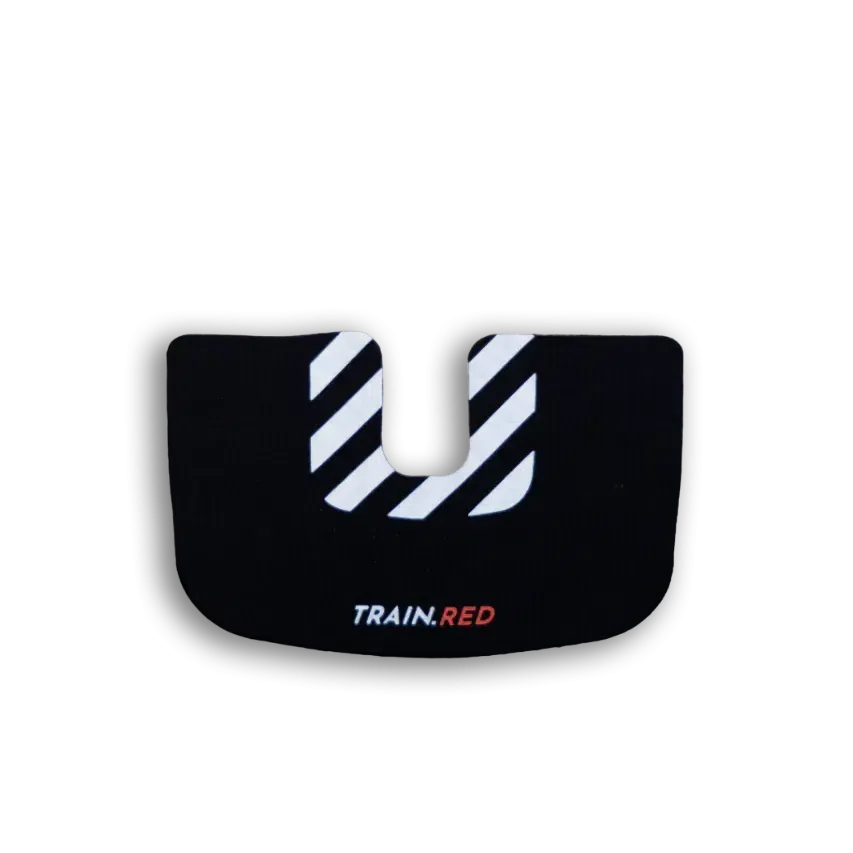
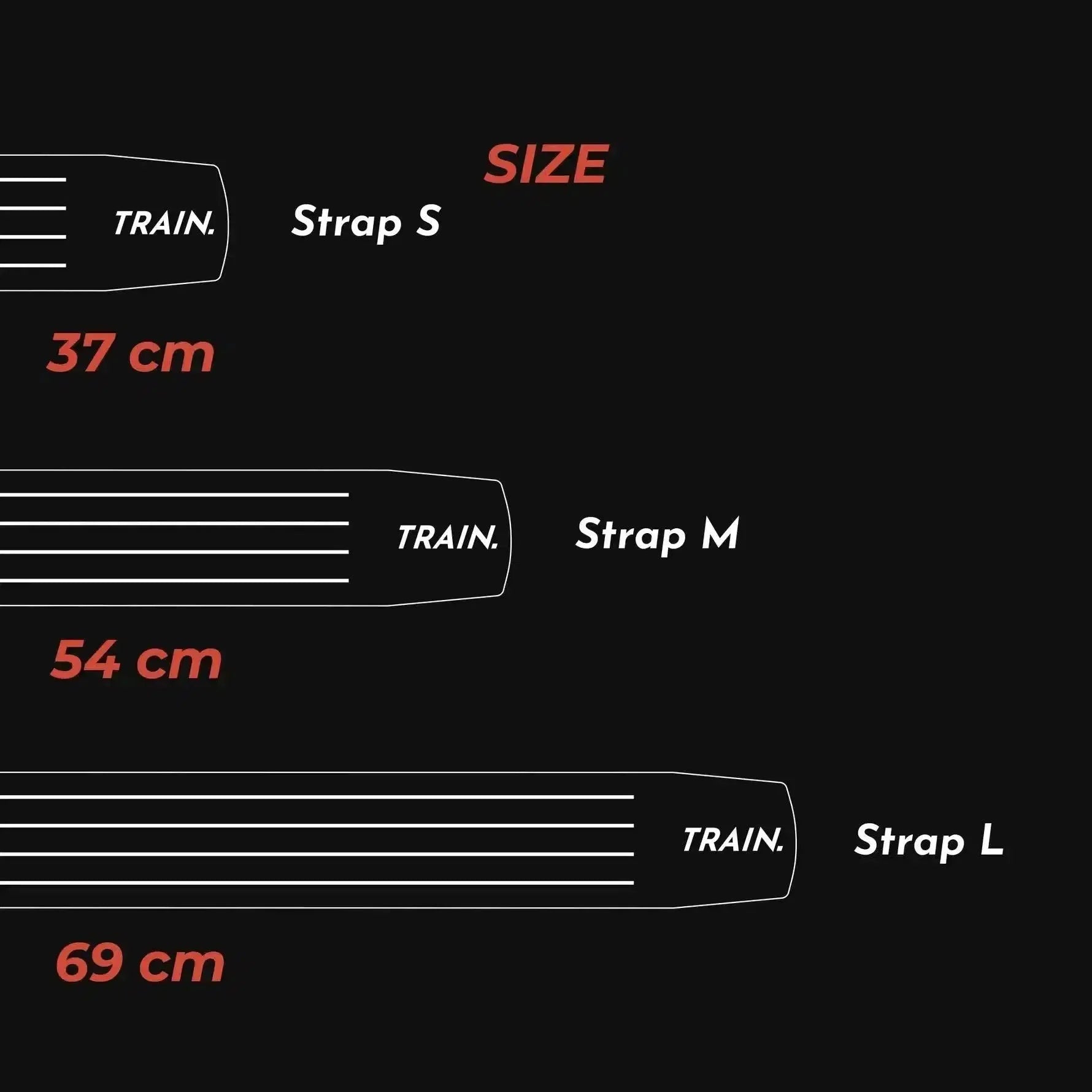
- 1x Full Set Sensor (Charging Cable, Strap Pack (S-M-L), 2 Plug and Travel Pouch)
- Free App
- Curso de oxígeno muscular
Add a second sensor for bilateral or client-facing testing
- 2x Full Set Sensor (Charging Cable, Strap Pack (S-M-L), 2 Plug and Travel Pouch)
- Free App
- Curso de oxígeno muscular
- 30-min 1-on-1 session
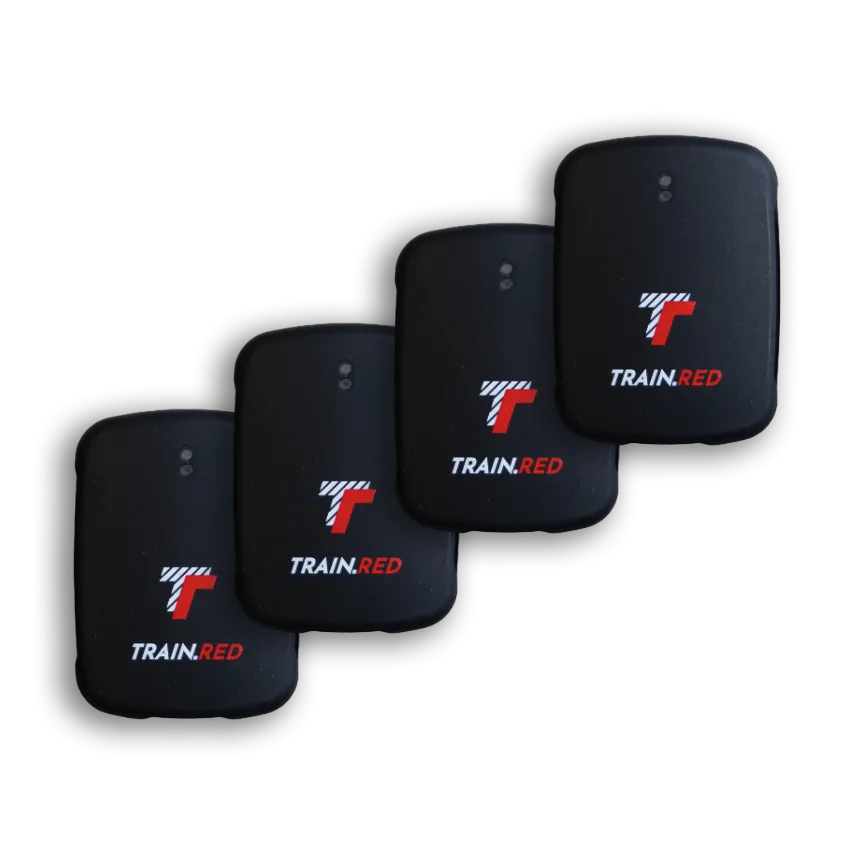
4 sensors, small groups up to full squads
- 4x Full Set Sensor (Charging Cable, Strap Pack (S-M-L), 2 Plug and Travel Pouch)
- Free App
- Curso de oxígeno muscular
- 2x 30-min 1-on-1 data sessions
See what your muscles are doing.
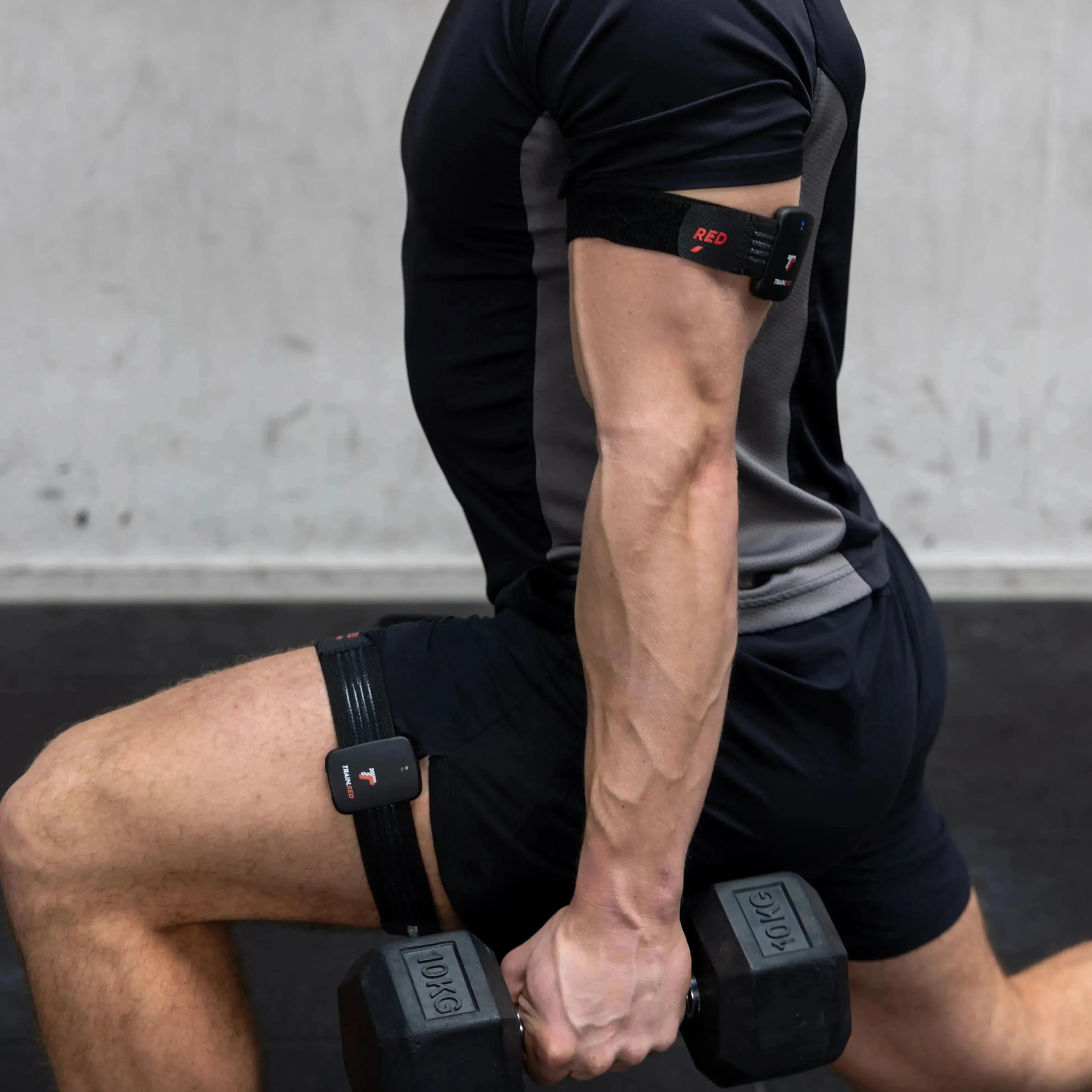
While athletes focus on gear and training plans, they often overlook the true source of performance: your muscles. Your heart rate shows your overall effort, but Train.Red FYER 2.0 reveals exactly what is happening inside your muscles.
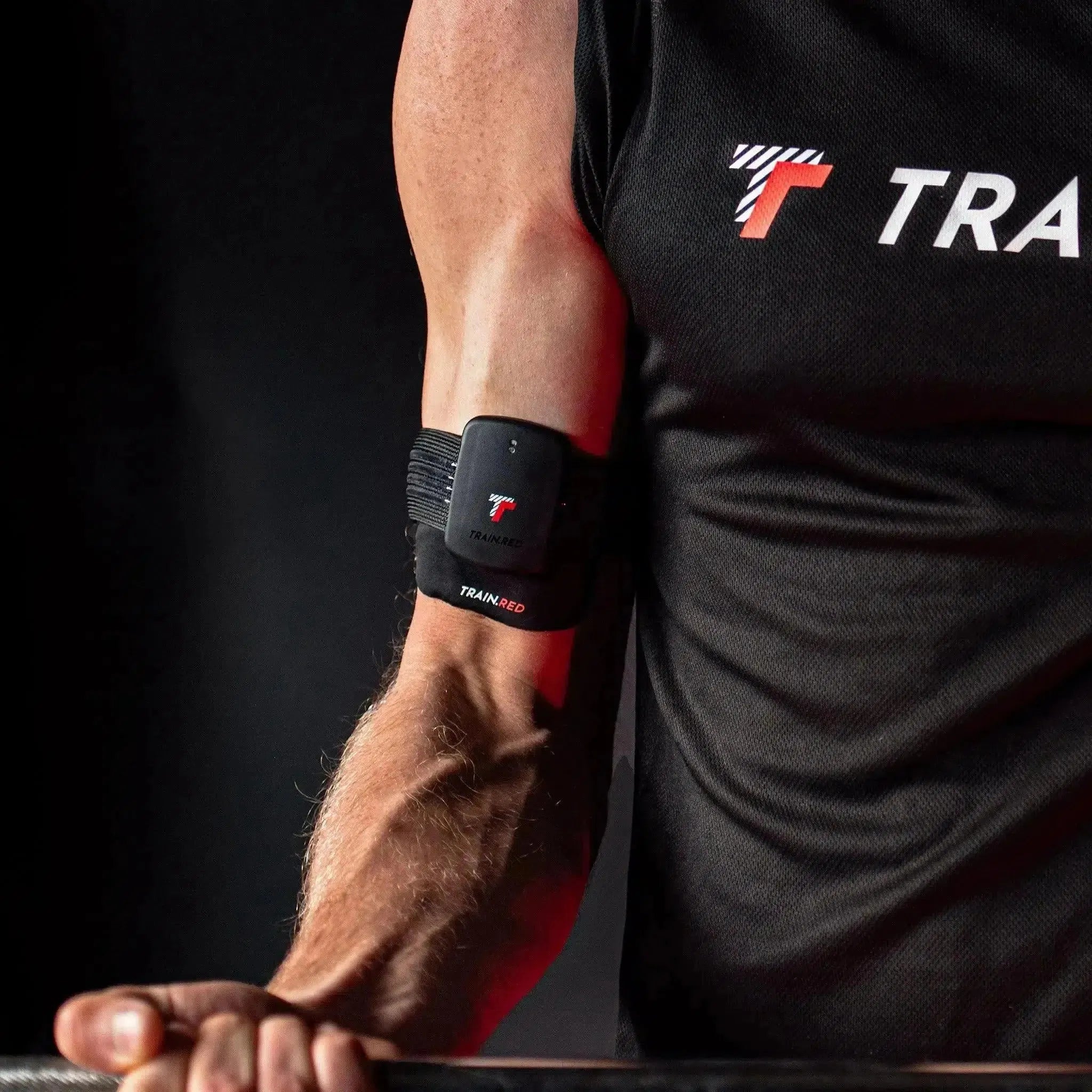
FYER 2.0 allows you to optimize training intensity, fatigue, and recovery in real time. Through the Train.Red app, it transforms complex data into actionable insights. You can also connect 10+ sensors to a single device for seamless team and group monitoring.
Key Metrics:
- SmO2: Real-time muscle oxygen saturation
- Muscle States & MSS: Muscle response and strain quantification
- Recovery & Oxygen Use: Track oxygen demand, utilization, and recovery rate
- Weight: 20 g
- Battery Life: Up to 20 hours
- Durability: IPX7 waterproof with onboard storage
Todo lo que necesita saber sobre el FYER
Train.Red realiza un seguimiento del oxígeno muscular en tiempo real mediante sensores. Nuestra app inteligente traduce estos valores musculares en funciones clave para guiar a los deportistas a mejorar su rendimiento.
MANUAL DE USUARIO FYEREspecificaciones
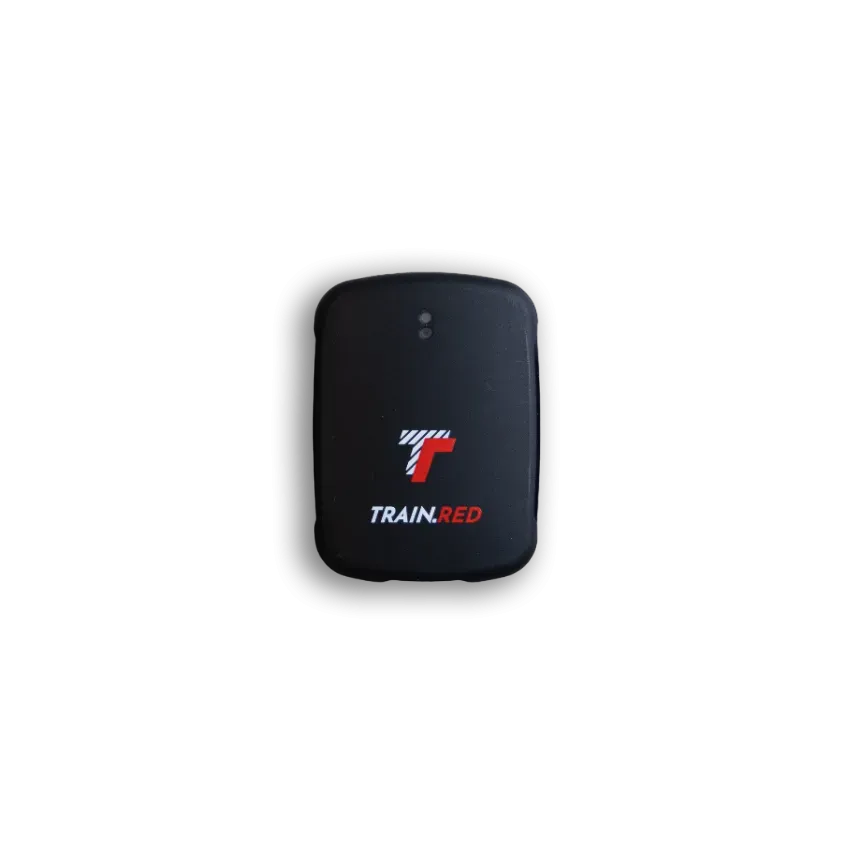
- Tamaño: 1,2 x 4,4 x 5,9 cm (0,5 x 1,7 x 2,3 in)
- Peso: 20 g
- Profundidad de medición: Hasta 20 mm en el músculo
- Distancia entre la fuente de luz y el detector: Hasta 35 mm
- Resistente al agua: Sí (se puede nadar añadiendo un tapón)
- Duración de la batería: Hasta 20 horas de uso activo
- Velocidad: 10 Hz
- Conectividad: BLE Y ANT
- IMU: giroscopio y acelerómetro
- Almacenamiento a bordo: Tus data siempre disponibles
- Conexión multidispositivo: Conecta más de 10 sensores FYER a 1 dispositivo inteligente para monitorizar equipos o grupos.
- Materiales: ABS y TPE biocompatibles de alta calidad
Train.Red aplicación
TheTrainTrain.Red FYER funciona mejor con nuestraaplicación TheTrainTrain.Red , que proporciona información detallada sobre el oxígeno muscular para ayudarte a entrenar de forma más inteligente.
Consulta el manual de la aplicación aquí.
Compatibilidad
✔️ VO2Master Manager
✔️ Splendo Health & Fit
✔️ Perfiles ANT+ (Garmin, Wahoo, etc.)
✔️ Integración de campo de Data Garmin
✔️ Fulgaz, y más
What is Train.Red?
Train.Red develops and manufactures wearable muscle oxygen sensors and systems that track your muscles in real time, using Near-Infrared Spectroscopy (NIRS) to measure muscle oxygen saturation (SmO2% or TSI%) and hemoglobin concentration. Most training tools already cover speed, workload, and heart rate. Train.Red covers the part they miss: what's actually happening inside the muscle.
Train.Red is an independent company, founded by a core team with a background at Artinis Medical Systems, the Dutch NIRS manufacturer behind the current golden standard in the field. That's where the founding team's NIRS expertise comes from; it packed that scientific grounding into 20 grams of wearable tech, no lab required. Measuring oxygen in the muscle is only the starting point, though. Train.Red's coaching layer turns that data into features any athlete can use, no science degree needed: when a muscle is fatiguing, how long it needs to recover, whether an interval was too hard, too easy, or right on target.
Muscle oxygen is where Train.Red started, not where it ends. The company's broader focus is human performance as a whole, physical and cognitive, which puts Train.Red across a wider field than muscle monitoring alone: sports labs, physical performance, wellness, and health. The belief behind it stays the same regardless of which system is doing the measuring: everyone should be able to benefit from their own body's potential, and use that data to actually perform better.
FYER vs. FYER PRO vs. PLUS 2.0: What is the difference?
Train.Red's three muscle oxygen monitors, FYER 2.0, FYER PRO, and PLUS 2.0, are built on two different NIRS designs:
FYER 2.0 & FYER PRO (Line Sensor Technology): These models use Train.Red's own line sensor technology. A line sensor is a row of tiny light receivers rather than one fixed detector. It works something like a camera's shutter speed: if the muscle is reflecting a lot of light, the sensor shortens how long the receivers stay on; if the signal is weak, it lengthens that exposure window and adjusts the transmitter's output to match. This constant self-calibration keeps the reading accurate across varying muscle tissue, skin tone, and blood flow.
FYER 2.0: Weighs 20 grams, IPX7 waterproof, and samples SmO2 at 10Hz. Battery life runs about 20 hours per charge. It reports SmO2% directly, without the full hemoglobin breakdown.
FYER PRO: Shares the same lightweight, waterproof body as the FYER 2.0 but samples up to 100Hz. It adds O2Hb, HHb, tHb, and HbDiff to the readout alongside SmO2%.
PLUS 2.0 (Gold-Standard Research Sensor): Uses the gold-standard NIRS technology found in clinical and research-grade systems, calibrated in-house against physical tissue models (phantoms). It features six measurement channels instead of one, allowing it to read across a wider tissue depth or cover several muscle sites at once for full metabolic profiling. It weighs 26 grams, is IPX4 sweat-resistant, and runs about 12 hours per charge.
All three feed into the same free app and Muscle States coaching layer over BLE/ANT+. Every sensor exposes its full raw data, but the app exists to turn "SmO2 dropped to 42%" into "back off pace now, before you feel it.
SmO2 vs. heart rate: why does muscle oxygen matter more for intervals?
Heart rate tells you how hard your heart is working; it doesn't tell you how your muscle is actually doing. It is a whole-body number, it lags behind what's really happening, and it shifts with caffeine, heat, sleep, or stress—none of which has much to do with your quads at that specific moment.
SmO2 skips all of that. It shows, muscle by muscle, whether oxygen supply is keeping up with oxygen demand right now. An athlete can catch local fatigue building before it shows up in pace or power output, identify their actual physiological limiter instead of a stand-in for it, and set work and rest intervals around what the muscle needs.
How does a muscle oxygen sensor acoustically measure SmO2?
It shines near-infrared light through the skin into the muscle and reads how much of that light bounces back. Oxygenated and deoxygenated hemoglobin absorb near-infrared light at slightly different wavelengths. By measuring the reflected light, the sensor works out the ratio between the two. That ratio is SmO2, expressed as a percentage.
The measurement happens continuously and non-invasively, right at the muscle. That means it captures what's happening in that specific tissue as it happens, not an estimate inferred from somewhere else in the body. Train.Red applies this principle, refined over decades of NIRS research, in a package built for training rather than a lab bench.
El 90% de las personas también compraron esto

fyer Unboxing